
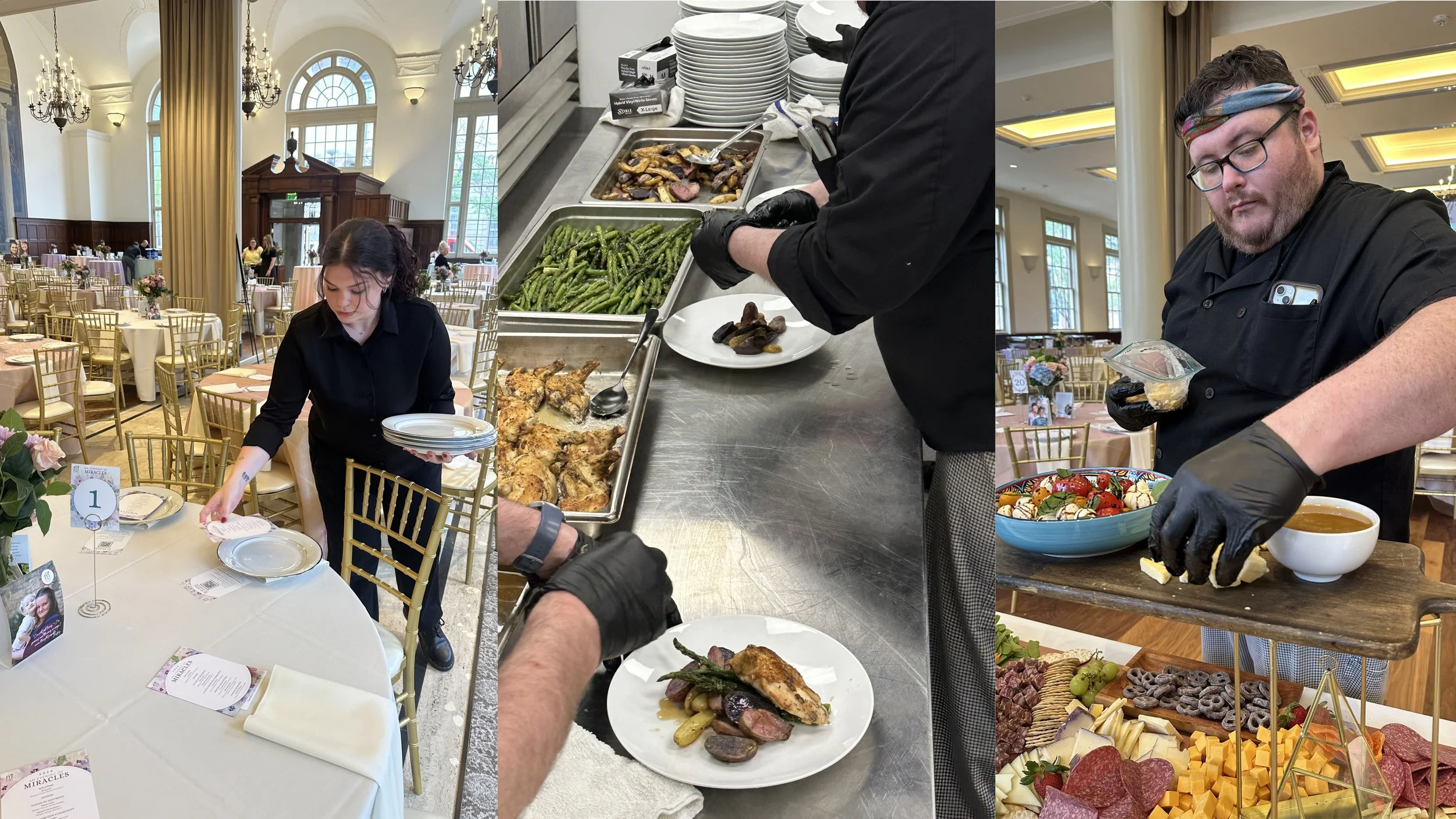
The invitation says 5:30pm to 8:30pm. Three hours. That's the part the guest experiences.
Everything else, the part that actually makes those three hours work, happens in a building and kitchen days before.
Sales
A custom menu: passed hors d'oeuvres to open, a stationed spread to keep people moving, a grazing table anchoring the room, small plates and sliders throughout the night, dessert to close it out. Two bars, both fully stocked, both staffed. Eighty guests. Sales has already walked the client through the shape of the evening, priced it, confirmed the headcount, and locked the menu. Now it's operations' responsibility, and operations starts counting backward from 5:30pm.
Order
Everything on that menu traces back to a purveyor, and every purveyor has a cutoff. Proteins ordered days ahead. Produce timed so it arrives close enough to service that it's still at its best, far enough ahead that there's a buffer if a delivery is late or short. Rentals confirmed: plates, glassware, linens, whatever the two-bar setup requires that doesn't live in the building already. A grazing table for 80 isn't a platter, it's craftsmanship.
Prep
This is where the multiple days live. Components that can be made ahead get made ahead, because service night has no room for anything that can be done Tuesday. Sauces, doughs, marinades, anything that improves by sitting. The morning of the event, the kitchen is full before the sun's all the way up, finishing what couldn't be started early: garnishing, portioning, building the pieces that have to go out looking like they were made an hour ago because they were.
Pack out
Every hotel pan, every piece of equipment, every garnish and napkin and bar tool gets built into a load list, and the load list gets built into the truck in an order that matters. What goes in first comes out last. Cold stays cold as long as possible. Nothing shifts on the drive because nothing was packed loose. This is the part that looks like moving, and is actually still cooking, because a mistake here shows up on a plate two hours later.The truck leaves with a buffer built in, because traffic can pop up out of nowhere. Arrival time isn't the goal. Enough time to set up before the goal is the goal.
Set up
Most private events don't come with a kitchen. They come with a garage, a tent, a corner of a barn, the middle of a corn field, a room that was clearly never meant to plate 80 covers of hors d'oeuvres in under an hour. Figuring out where the hot line goes, where the cold storage goes, where the trash goes so it's not in anyone's way, where the two bars can run without crossing the food traffic, if it's our first time in the space, that's a decision made in 15 minutes on site and potentially moved before start time. Get it right and nobody notices there wasn't a true kitchen at all.
5:30pm
5:30pm hits and the passed trays start moving. The stations get built and restocked without ever looking empty. The grazing table gets refreshed so it looks untouched even after eighty people have been through it twice. Small plates go out in waves timed to the room, not the clock. Both bars stay ahead of the line before there is one. The client is somewhere in that room, and the job isn't just feeding the guests, it's making sure the client can stand there and take credit for how good the night feels, because that's what they're paying for. The guests should be talking about the food and drinks. The client should be hearing about it.
8:30pm
The last small plate goes out, dessert closes the night, and the takedown starts before the last guests have finished saying goodbye. Everything gets broken down in reverse: bars first if they've gone quiet, stations as they empty, the grazing table last because it's still working until it isn't.
Load out
Same discipline as the drive in, now with everything dirty, everything tired, and less daylight to do it in. The truck gets loaded, the site gets left the way it was found, and the drive back to home base is the first quiet part of the day.
Return
Everything comes off the truck. Equipment gets washed, sanitized, dried, and put back where it lives so it's ready for the next order that's already sitting in the inbox. The kitchen gets reset. By the time the building is dark, the day that started before sunrise is finally over, and it started days before that.
Three hours on the invitation. Days of ordering, prep, packing, driving, building a kitchen out of nothing, running a room, and putting it all away on the other side of it. Three hours is the show. Everything else is the job. And there's real satisfaction in pulling it off, every single time.
-Paul
